How can you nurture your child's early math curiosity? Early math education goes beyond problem-solving; it's about making numbers fun and integrating concepts into everyday life. Discover engaging activities and practical tips for fostering a love for math in young children.

Spotting Your Child's First Glimmers of Math Curiosity
It's a delightful moment when your little one spontaneously starts counting steps as they climb, or attempts to divide toys among friends. This burgeoning interest in numbers and quantities often becomes particularly noticeable as children transition from age 4 to 6. Witnessing their tiny fingers count objects or hearing them ask for 'one more!' of a favorite snack are clear signs that your child is naturally exploring the world of mathematics. As parents, observing these sparks of interest can lead to a common question: How can we best support and develop this early curiosity? The challenge lies in fostering this budding understanding without turning it into a chore. For young learners, early math education thrives when it's an engaging journey of discovery, rather than just rote memorization or structured lessons.

Balancing Play and Learning in Early Childhood Math
When parents notice their child's mathematical potential, it's easy to feel a sense of urgency. Thoughts like 'Am I falling behind?' or 'What if my child struggles later?' can creep in. Simultaneously, there's concern that pushing too hard too soon might create an aversion to learning. Navigating this dilemma requires a thoughtful approach. Simply handing a child a worksheet or forcing them through complex concepts might stifle their natural enthusiasm. The essence of early math education isn't about achieving perfect scores; it's about the child enjoying the process, exploring concepts, and developing an intuitive understanding. Children learn most effectively through play and interaction. Therefore, creating an environment that sparks interest and encourages independent thought, tailored to their developmental stage, is paramount. When children perceive numbers as playful elements rather than academic hurdles, genuine learning truly begins.
※ This post contains affiliate links. I may earn a commission at no extra cost to you.


Engaging Activities for Fun Early Math Experiences
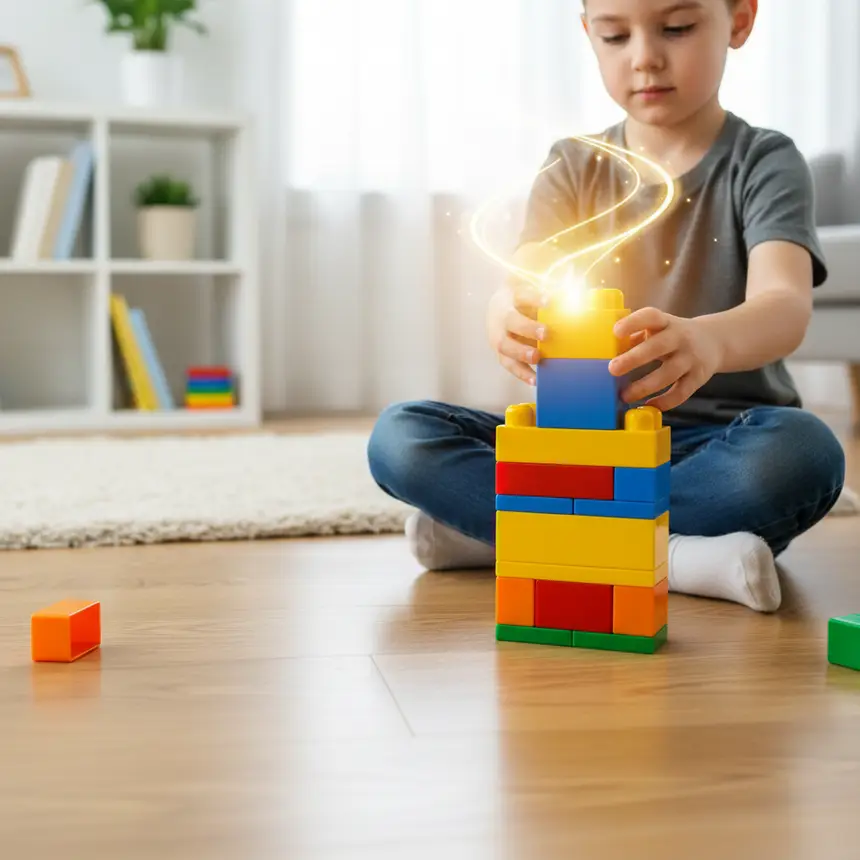
Early math learning doesn't have to be confined to textbooks. Incorporating stories, beloved characters, and vibrant illustrations can make counting, pattern recognition, and quantity comparison highly engaging. Imagine counting the number of animal friends in a picture book together, or comparing groups of toy cars to naturally introduce basic addition and subtraction. The key is to present these activities as extensions of play, rather than formal 'study.' Visual aids are incredibly powerful tools for young minds. Using colorful building blocks or tangible objects to demonstrate how numbers can be broken down or combined helps children grasp abstract concepts more readily. These hands-on experiences build a strong number sense and instill confidence in their ability to approach future mathematical challenges.

Practical Tips for Integrating Math into Daily Life
Mathematical thinking isn't solely developed within the confines of a classroom. Its impact is amplified when children connect what they learn to their everyday experiences. For instance, while preparing snacks, ask questions like, "If we have five apples and eat two, how many are left?" or use shoe organization to teach matching and pairing concepts. Consistent mathematical conversations in daily routines help children apply abstract ideas to concrete situations, deepening their understanding. Furthermore, multi-sensory learning, involving touch, hearing, and sight, can significantly boost engagement and memory. Activities like physically manipulating number objects, or singing counting songs with corresponding movements, make math more enjoyable and accessible. Adapting to your child's learning pace and celebrating their small victories with ample praise are crucial for fostering a positive attitude towards mathematics.

Investing in Joyful Math: A Bright Future for Your Child
Early childhood is a critical period where a child's boundless curiosity blossoms. During this time, it's vital that children perceive math not as a 'difficult and boring' subject, but as something 'fun and worth exploring.' Parents play a key role in this by embracing patience rather than urgency, aligning with their child's interests and pace. Create moments where your child joyfully exclaims, 'I want to do it again!' Offer generous encouragement and praise for even small successes, helping them develop a positive self-perception of their mathematical abilities. Math is more than just numbers; it's a fundamental tool for developing logical reasoning and problem-solving skills. When children discover the joy of understanding and exploring the world through early math, it positively influences their overall development. Start this exciting mathematical journey with your child today. Sharing laughter and learning at their level will create some of the most cherished experiences.
Frequently Asked Questions
Q. What's the best age to introduce early math concepts to children?
A. The ideal time to introduce early math is when your child naturally starts showing curiosity about numbers. This often begins around ages 4-5, when they become interested in counting and quantity. It's best to introduce concepts through play and everyday activities rather than forced lessons, always matching their developmental stage and interest.
Q. My child struggles with math; how can I help them?
A. If your child finds math challenging, consider changing the learning approach. Instead of rigid problem-solving, integrate math concepts into activities they enjoy and daily routines. For example, building blocks, drawing, or simple cooking can teach counting, sorting, and patterns. Offering plenty of praise for small achievements can boost their confidence and make learning more positive.
Q. What's the most important aspect of early math education?
A. The most crucial aspect is ensuring your child experiences math as fun and positive. Focus on fostering their interest and developing logical thinking during the problem-solving process, rather than just getting the right answer. Approaching math playfully, at their level, and allowing them ample time to explore and discover independently will yield the most long-term benefits.
Q. Can you suggest specific ways to build math skills in daily life?
A. Absolutely! Count items at the grocery store, compare ingredient amounts while cooking, sort clothes by size, or read numbers on car license plates. Puzzles, board games, and card games are also excellent tools for developing number sense and logical reasoning. Engaging in natural mathematical conversations with your child throughout the day is very effective.