Empower your elementary school child with enhanced focus and cognitive abilities. Discover effective strategies to nurture their concentration, emotional intelligence, and self-directed learning for academic and life success.

Is Your Child Struggling to Stay Focused on Tasks?
Many parents express concern about their elementary-aged children's concentration. If your child frequently appears distracted during lessons, takes an unusually long time to start homework, or gets sidetracked by minor stimuli, it might not just be a matter of laziness. Instead, it could indicate challenges in the development of a crucial cognitive skill: focus. The elementary years are pivotal for shaping a child's cognitive abilities and learning habits. Establishing an environment that supports effective focus improvement during this period can profoundly influence their future academic success and overall development. Let's explore together how we can cultivate our children's focus, helping them unlock their full potential and embrace learning joyfully.

Understanding the Diverse Reasons Behind a Child's Fluctuating Focus
Issues with concentration in elementary school children can stem from a complex interplay of various factors. Firstly, a child's brain is still developing, making it naturally difficult for them to sustain attention on a single task for extended periods, unlike adults. Specifically, the prefrontal cortex, responsible for higher-order cognitive functions like attention, planning, and problem-solving, continues to mature well into adolescence. Therefore, it's crucial to understand these developmental characteristics rather than simply scolding a child for short attention spans. Secondly, external environmental factors play a significant role. Excessive exposure to digital devices can constantly stimulate the brain, training it to seek immediate gratification. This makes it challenging for children to focus on activities that require patience or that they might find less instantly engaging. Furthermore, physical conditions such as irregular routines, insufficient sleep, and nutritional imbalances can directly impact concentration levels. Lastly, emotional factors like anxiety, stress, or low self-esteem can also be primary contributors to poor focus. When a child is emotionally unstable, the energy required for learning is often diverted to managing their emotions, leaving less capacity for cognitive tasks.
※ This post contains affiliate links. I may earn a commission at no extra cost to you.


Multi-faceted Strategies to Cultivate Concentration
A child's concentration isn't just a skill that can be maximized through short-term training; it's intricately linked to their overall growth process. Therefore, a balanced approach is necessary, considering four key pillars: cognitive abilities, emotional stability, physical activity, and creating an optimal environment.
First, Cognitive Enhancement Activities can effectively stimulate a child's brain. For example, board games that require understanding and applying rules, puzzles, and strategic play can foster a child's problem-solving skills and logical thinking, thereby improving the cognitive abilities essential for learning. Additionally, activities like listening to a story and summarizing it, or reading a short text and identifying its main points, help develop metacognitive skills, enabling children to monitor and regulate their own learning processes.
Second, Fostering Emotional Stability is one of the most crucial foundations for concentration. It's vital to help children recognize their emotions and learn healthy ways to express them. Practices such as listening to calm music and deep breathing for about five minutes daily, or using a picture journal to record daily emotions, can enhance emotional regulation and promote inner calm, thereby boosting focus. Positive interactions that build confidence and self-esteem empower children to engage in new challenges without fear.
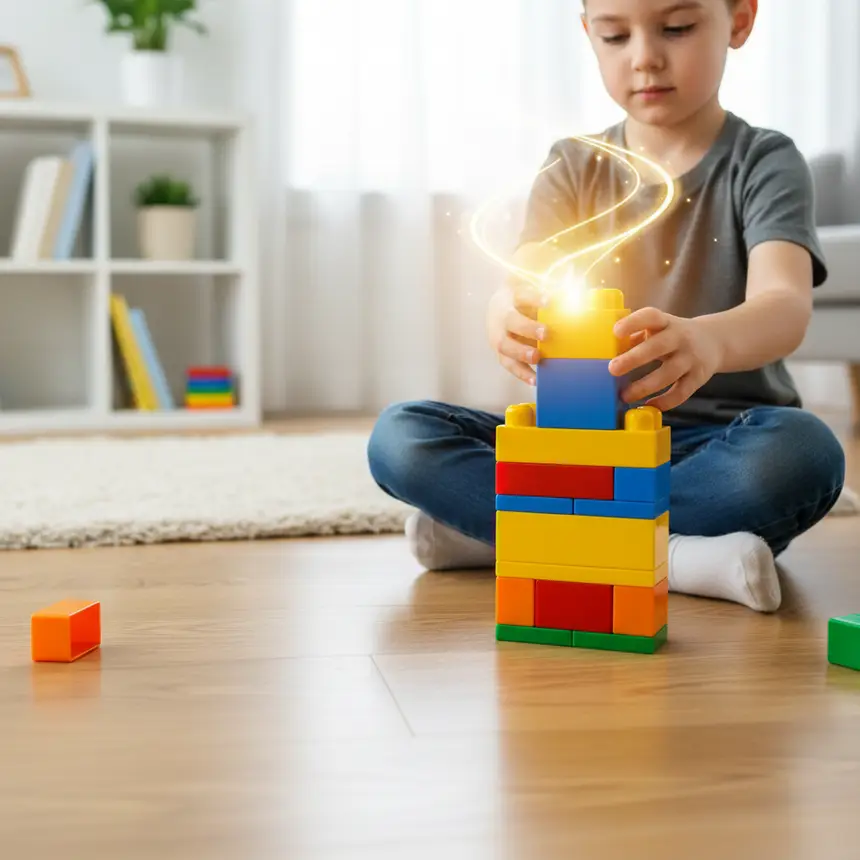
Third, Sufficient Physical Activity and Sensory Integration are indispensable for brain development. Beyond simply moving, engaging in play that utilizes various senses helps connect different brain regions and maintain balance. For instance, playing with dirt, building with blocks, or throwing and catching a ball not only develop fine and gross motor skills but also naturally cultivate spatial awareness and attention. Over 30 minutes of outdoor activity at least three times a week supplies oxygen to the brain and relieves stress, positively impacting sustained attention.
Finally, Creating an Optimal Learning Environment cannot be overlooked. Establishing a study space with minimal distractions and setting regular study times provides a predictable environment, which is crucial. Helping children set and achieve their own goals fosters self-directedness, and experiencing small successes builds a sense of accomplishment—all key elements for long-term concentration development.
First, Cognitive Enhancement Activities can effectively stimulate a child's brain. For example, board games that require understanding and applying rules, puzzles, and strategic play can foster a child's problem-solving skills and logical thinking, thereby improving the cognitive abilities essential for learning. Additionally, activities like listening to a story and summarizing it, or reading a short text and identifying its main points, help develop metacognitive skills, enabling children to monitor and regulate their own learning processes.
Second, Fostering Emotional Stability is one of the most crucial foundations for concentration. It's vital to help children recognize their emotions and learn healthy ways to express them. Practices such as listening to calm music and deep breathing for about five minutes daily, or using a picture journal to record daily emotions, can enhance emotional regulation and promote inner calm, thereby boosting focus. Positive interactions that build confidence and self-esteem empower children to engage in new challenges without fear.
Third, Sufficient Physical Activity and Sensory Integration are indispensable for brain development. Beyond simply moving, engaging in play that utilizes various senses helps connect different brain regions and maintain balance. For instance, playing with dirt, building with blocks, or throwing and catching a ball not only develop fine and gross motor skills but also naturally cultivate spatial awareness and attention. Over 30 minutes of outdoor activity at least three times a week supplies oxygen to the brain and relieves stress, positively impacting sustained attention.
Finally, Creating an Optimal Learning Environment cannot be overlooked. Establishing a study space with minimal distractions and setting regular study times provides a predictable environment, which is crucial. Helping children set and achieve their own goals fosters self-directedness, and experiencing small successes builds a sense of accomplishment—all key elements for long-term concentration development.

Practical Activities for Enhancing Focus in Daily Life
Parents can implement various effective activities in their daily routines to boost their child's concentration. These don't require elaborate educational programs but can significantly stimulate brain development and increase engagement.
- 'Treasure Hunt' for Observation and Memory: Hide small objects in specific areas of the house and have your child find them. Provide hints to encourage focused exploration of their surroundings. This activity is effective for enhancing visual concentration and short-term memory.
- 'Story Chaining' for Language and Imagination: You start with one sentence, and your child adds the next to build a story. By focusing on the given sentence and imagining new content, children develop not only concentration but also language skills and creative thinking.
- 'Emotion Weather Journal' for Emotional Regulation: Each evening, have your child express their mood using weather symbols (sunny, cloudy, rainy, etc.) and briefly talk about or draw why they feel that way. This activity helps children recognize and express their emotions, fostering emotional stability which indirectly supports concentration.
- 'Nature Scavenger Hunt' for Sensory Stimulation: On weekends, visit a nearby park or forest to observe and touch natural objects like leaves, pebbles, and flowers, stimulating all five senses. Guiding your child to find specific features of natural items can cultivate their focused exploration and observation skills.

Nurturing Your Child's Bright Focus with Consistency
Improving an elementary school child's concentration is more like a marathon than a sprint. Instead of feeling discouraged if your child seems to lack natural talent, remember that anyone can develop their focus through proper understanding and consistent effort. The key is to respect your child's developmental stage and continuously provide engaging and meaningful activities within their daily life. Play that stimulates cognitive abilities, conversations that foster emotional stability, sufficient physical activity, and a structured learning environment are all essential elements for a child to become self-motivated and thrive. By consistently applying the multifaceted approaches and practical tips shared today, your child will gain confidence in learning and develop a brilliant focus that allows them to unlock their potential in any situation. Remember, parents' patience and warm support are paramount for their child's healthy development.
Frequently Asked Questions
Q. What are the main reasons for decreased concentration in elementary school children?
A. Decreased concentration in elementary school children can stem from various complex reasons, including underdeveloped brains, excessive digital device use, irregular routines, insufficient sleep, nutritional imbalances, and emotional factors like anxiety or stress.
Q. What home activities can help improve learning efficiency?
A. Activities like board games, puzzles, story chaining, drawing journals, and nature walks can help children develop cognitive abilities, language skills, emotional regulation, and observation skills, thus improving learning efficiency.
Q. How can parents create an optimal learning environment to improve a child's focus?
A. It's crucial to set up a study space with minimal distractions, establish regular study times, and help the child experience setting and achieving their own goals to foster self-directedness.
Q. What is the impact of emotional stability on concentration, and how can parents help?
A. Emotional stability is a critical foundation for concentration. Helping children recognize and express their emotions healthily, and boosting their confidence and self-esteem through positive interactions, can significantly improve their engagement in learning.
Q. How can I foster my child's self-directed learning abilities?
A. Guide your child to set their own learning goals, plan how to achieve them, and evaluate the outcomes. Allowing them to experience small successes and feel a sense of accomplishment is key to developing self-directed learning abilities.