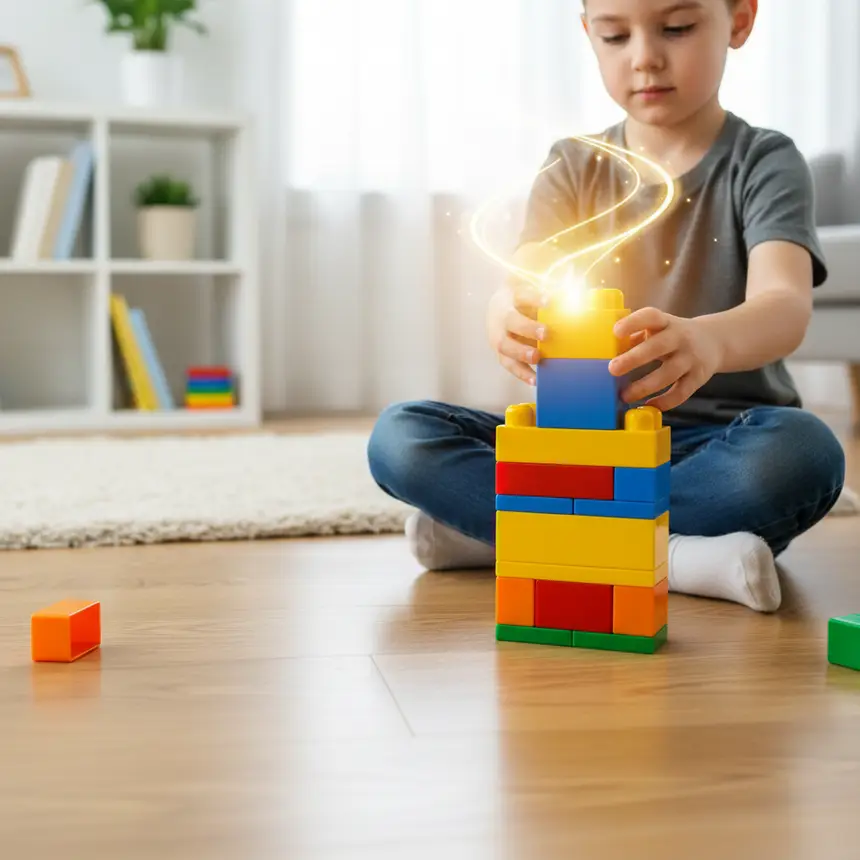
Unlock your child's creative potential by encouraging them to see the world differently. Discover engaging ways to stimulate divergent thinking and imagination through exploring unique shapes and patterns in daily life.

The Curious Gaze: A Child's Window to the World
Toddlers often find extraordinary things in the ordinary scenes adults easily overlook. You might catch your child tracing the wavy pattern on the living room rug with their finger, or intently staring at the curves of a fruit on the kitchen counter. Sometimes, out of the blue, they'll ask, “Mommy, why is that tree branch so twisty?” These moments are natural attempts by children to explore their world and understand it in their own unique way. What might seem like a mundane object to a parent can be a treasure trove for a child, stimulating endless imagination and curiosity. How can we, as parents, transform these fleeting moments into powerful opportunities for developing our child's creativity?

Beyond Simple Observation: Expanding the Landscape of Thought
While children naturally delight in observing objects, guiding them to go a step further—to connect various ideas and generate novel thoughts—requires intentional effort. This crucial skill is at the heart of fostering toddler creativity: 'divergent thinking.' Divergent thinking is the ability to freely generate as many ideas as possible for a given topic or problem. Instead of just recognizing an object's shape, children learn to imagine and associate that shape with other things. This process helps them break free from rigid thought patterns, fostering a flexible and expansive perspective. This cognitive ability is not just about artistic expression; it forms a vital foundation for developing problem-solving skills and logical reasoning.
※ This post contains affiliate links. I may earn a commission at no extra cost to you.


The Power of Connection: Building Creativity Through Shape Play
One of the most effective ways to nurture a child's divergent thinking and toddler creativity is through play that connects specific features found in everyday objects. For example, choose a theme like 'things that are squiggly' and explore it together. Start by finding squiggly items in your classroom or home, like strings, yarn, or drawings. Then, encourage your child to imagine freely by asking, 'What else looks squiggly?' It's essential to let them explore all possibilities. Ideas might include a dog's tail, spaghetti noodles, a snail shell, or even Mom's curly hair. Such activities significantly help children connect existing knowledge with new information and view objects from multiple perspectives, boosting their creative thinking.

Simple Home Activities to Foster a Little Explorer
You don't need special supplies to boost your toddler's creativity. Try these activities in your daily life:
- Daily 5-Minute 'Shape Hunt': During meals, look for the bumpy texture of broccoli, the plaid pattern on a blanket, or the round shape of a ceiling light. Pick a specific shape and hunt for it together.
- Leverage the Power of Questions: Ask open-ended questions to spark their thinking, such as: 'What does this look like?', 'Where else could we see a shape like this?', or 'If this shape were alive, how would it move?'
- Create an 'Idea Sketchbook': Provide a space where your child can freely draw or scribble their discoveries and ideas. Focus on the process of expressing ideas rather than artistic perfection.
- Encourage Every Idea: Never criticize your child’s thoughts, even if they seem silly or unrealistic. Respond positively with phrases like, 'What a wonderful idea!' or 'I never thought of that!' Supporting their free thinking is crucial.

Empowering Imagination: The Parent's Role in Creative Growth
A child's toddler creativity doesn't stem from special educational programs or expensive toys. It grows from small attempts to explore the world with curious eyes and to connect discoveries in their unique ways, forming a vast forest of imagination. As parents, we can be the most steadfast supporters and cheerleaders in this journey of exploration. Listen attentively to whatever ideas your child comes up with, venture out to find new things together, and celebrate even the smallest discoveries. Your encouragement and support are the most powerful forces driving your child's ability to think independently, fostering their divergent thinking skills. Why not start a creative exploration today, discovering hidden treasures with your child in your everyday life?
Frequently Asked Questions
Q. Why is divergent thinking so important for toddler creativity?
A. Divergent thinking allows children to generate many different ideas or solutions to a single problem. It's crucial because it helps them break away from conventional thinking, explore new perspectives, and develop strong problem-solving skills from a young age.
Q. What's an easy activity to encourage divergent thinking at home?
A. Try a 'shape scavenger hunt.' Pick a shape (like 'round,' 'bumpy,' or 'squiggly') and have your child find objects around the house that match. Then, ask open-ended questions like, 'What else looks squiggly?' to prompt them to think of more examples.
Q. How should I react when my child comes up with a really wild or silly idea?
A. Always respond with encouragement! Say something like, 'Wow, that's such an interesting idea!' or 'I never thought of it that way!' Avoid criticism. Every idea, no matter how outlandish, is a step in their creative development, so support their free expression.