Is your child struggling with early math? Discover fun, play-based learning methods to build mathematical thinking beyond just counting. Explore effective, age-appropriate strategies for early math education.

H2: More Than Just Counting: The Early Math Struggles Parents Face
It’s a common relief for parents when their little ones can rattle off numbers and do some basic counting. But soon, a new challenge emerges. How do you effectively teach abstract concepts like 'more/less,' 'longer/shorter,' or the logic of sequences and patterns? Many parents worry that dry, repetitive drills or rigid problem-solving will quickly bore their child and, worse, turn them off mathematics entirely. What’s the secret to nurturing mathematical thinking in a fun, age-appropriate way? Early childhood math is much more than getting the right answer; it's about building a logical framework for understanding the world. How we approach this foundational stage can significantly shape a child's future learning attitude.

H2: Why Do Kids Lose Interest in Early Math? Uncovering the Real Reasons
A primary reason young children lose interest in math stems from the way it's often taught. Kids naturally learn and explore the world through play. However, many early math education approaches tend to focus on rote memorization of abstract numbers and symbols, or endless computation drills. This method often clashes with a child's developmental stage, leading to boredom and associating math with unexciting 'schoolwork.'
- Difficulty with Abstract Concepts: Ideas like quantity, shapes, and patterns can be very abstract for preschoolers. They become hard to grasp without connection to concrete objects or experiences.
- Fatigue from Repetition: Learning the same concept over and over in the exact same way quickly dampens a child's curiosity and shortens their attention span.
- Passive Learning Environments: Without opportunities to physically manipulate, explore, and interact, children become disengaged when simply sitting, listening, or solving problems.
- Lack of Success Experiences: Introducing overly difficult content too early can lead to frustration and a lack of confidence in math. If children don't experience the joy of discovering answers themselves, math can seem increasingly distant and challenging. Understanding these root causes is crucial for finding an approach that truly resonates with a child’s natural learning style.
※ This post contains affiliate links. I may earn a commission at no extra cost to you.


H2: Play-Based Math: Unlocking Your Child's Potential Through Engaging Learning
For children to naturally develop mathematical thinking, 'play' must be at the core of their learning experience. The goal is to foster the joy of self-discovery and exploration, rather than forced instruction.
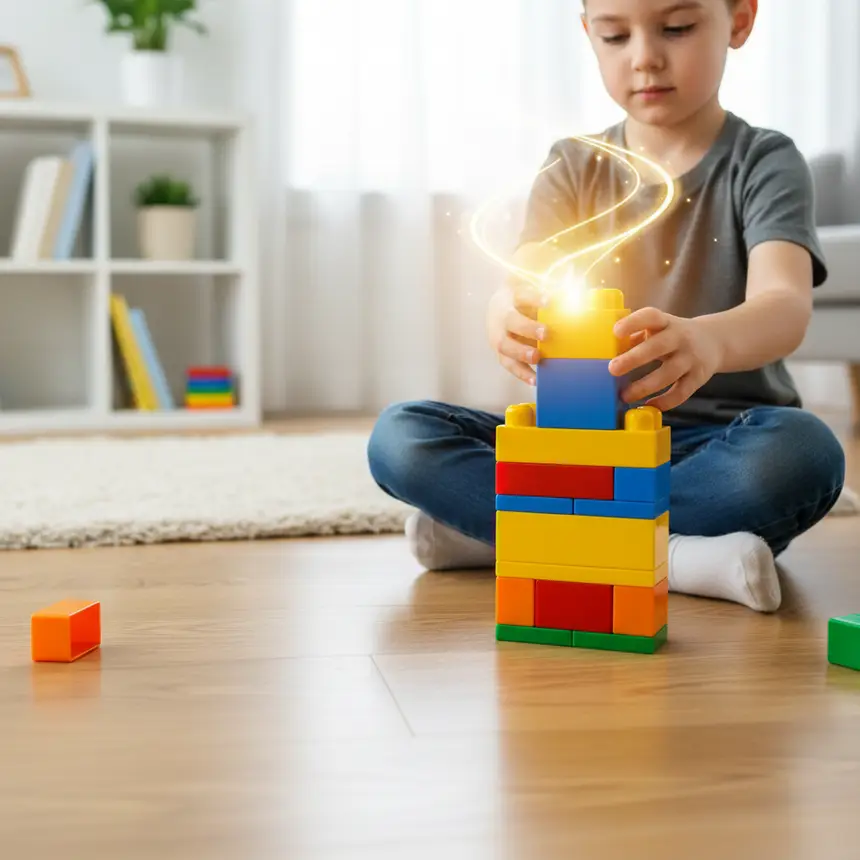
1. Hands-On with Concrete Materials: Transform abstract concepts into tangible experiences. For instance, building with blocks naturally introduces notions of height, quantity, and geometric properties. Slicing a pizza can illustrate fractions, while comparing toy car speeds teaches concepts of fast and slow. Engaging multiple senses through hands-on activities is the most effective way for young learners to grasp new ideas.
2. Varied Repetition for Deeper Understanding: Repeating the same concept through different activities can prevent boredom and enhance memory. Try singing number songs, playing size-comparison games with storybook characters, or using board games to learn sequences and rules. These diverse approaches help children internalize concepts naturally, without feeling like they're undergoing repetitive drills.
3. Focus on Higher-Order Thinking: Shift the emphasis from simple calculation to activities that promote critical thinking, such as comparing, classifying, pattern recognition, and shape exploration. Matching socks into pairs, observing differences in leaf shapes, or building a structured tower with blocks effectively cultivates a child's logical reasoning and problem-solving skills. It's more beneficial to encourage children to explain their thought process than just getting the right answer.
1. Hands-On with Concrete Materials: Transform abstract concepts into tangible experiences. For instance, building with blocks naturally introduces notions of height, quantity, and geometric properties. Slicing a pizza can illustrate fractions, while comparing toy car speeds teaches concepts of fast and slow. Engaging multiple senses through hands-on activities is the most effective way for young learners to grasp new ideas.
2. Varied Repetition for Deeper Understanding: Repeating the same concept through different activities can prevent boredom and enhance memory. Try singing number songs, playing size-comparison games with storybook characters, or using board games to learn sequences and rules. These diverse approaches help children internalize concepts naturally, without feeling like they're undergoing repetitive drills.
3. Focus on Higher-Order Thinking: Shift the emphasis from simple calculation to activities that promote critical thinking, such as comparing, classifying, pattern recognition, and shape exploration. Matching socks into pairs, observing differences in leaf shapes, or building a structured tower with blocks effectively cultivates a child's logical reasoning and problem-solving skills. It's more beneficial to encourage children to explain their thought process than just getting the right answer.

H2: Building Math Confidence: Practical Steps to Start Today
Success in early math education hinges on a child's genuine enjoyment and active participation. As parents, our role is to facilitate their interest and build confidence through small, positive experiences.
- Find Math in Everyday Life: Point out mathematical elements during daily routines. Count apples at the grocery store, practice sequencing while climbing stairs, or count plates when setting the table. This helps children understand that math isn't confined to a classroom but is an integral part of their world.
- Respect Their Pace: Every child develops at their own speed and has unique interests. Instead of comparing them to others or rushing ahead, it's crucial to progress slowly, matching their current level. If a child struggles, don't hesitate to revisit earlier concepts, giving them ample time to master it. Lavish praise and encouragement for every small achievement, and they'll discover the joy of learning independently.
- Cultivate Consistent, Enjoyable Habits: Early math is a marathon, not a sprint. Consistency is key. Establish a routine of short, play-based math activities each day. If your child starts looking forward to 'What math game will we play today?', you've achieved the most successful outcome. Fostering a positive association with math through joyful experiences will profoundly impact their long-term academic development.
Frequently Asked Questions
Q. My child is good at counting but struggles with math concepts. How can I help?
A. While counting often relies on rote memorization, math concepts require understanding and application. For concepts like 'more/less,' show them two apples versus five apples to compare, or engage them in sorting their toys. Reading picture books and finding mathematical concepts within the story can also be very effective.
Q. How can I prevent my child from getting bored during early math learning?
A. If your child seems bored, it's a sign that the learning method isn't engaging them. Try keeping learning sessions short and introduce a variety of play-based activities. Incorporate elements your child loves, like songs, games, or storytelling. It's more effective to encourage them to choose and participate rather than forcing them.
Q. What's the best age to start early math education?
A. Rather than a specific age, it's best to start when your child shows natural curiosity about the world around them and begins asking questions. If they show interest in numbers or ask about the size and shape of objects, that's a good starting point. The key is to help them naturally discover and explore mathematical elements within their everyday life.
Q. Should I push advanced math topics early to raise a math prodigy?
A. The goal of early childhood math education isn't to solve complex problems through advanced learning, but to foster a positive attitude towards math and develop fundamental logical thinking skills. Approaching math playfully with activities appropriate for your child's developmental stage is far more important for long-term mathematical growth and sustained interest. Pushing too hard too early can actually create an aversion to math.