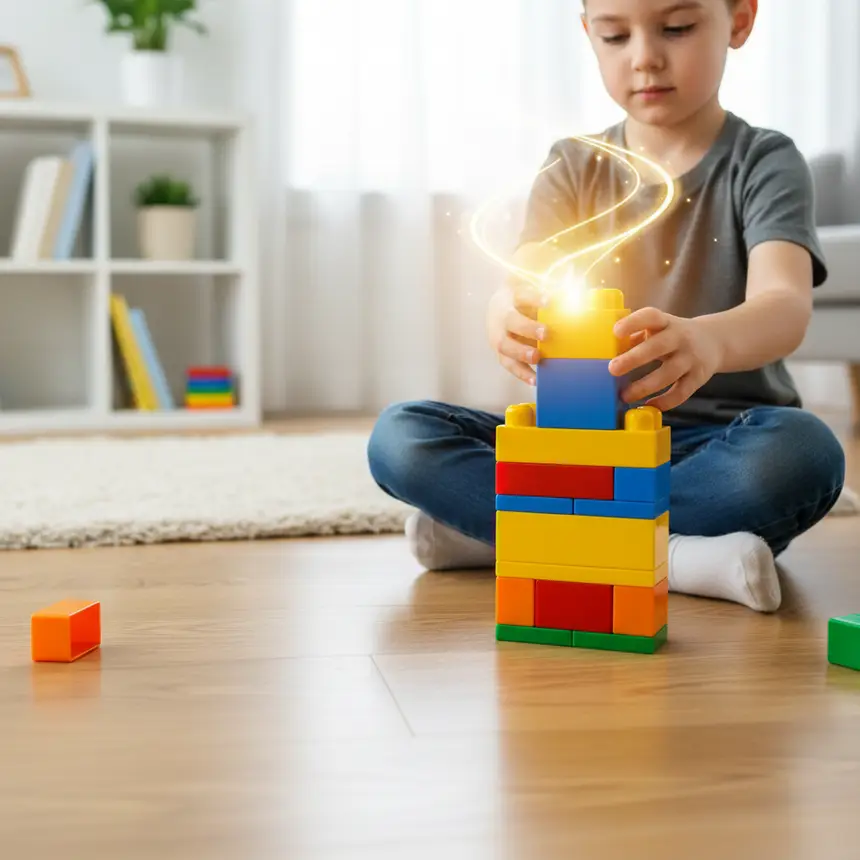
The 48-month well-child check-up is a key milestone for understanding your child's development. Explore critical areas like gross motor, fine motor, cognitive, language, and social skills, and discover practical parenting solutions for healthy growth.

Watching Them Grow: The Exciting World of Your 4-Year-Old's Development
As your child approaches their fourth birthday, every day brings new wonders and milestones. Parents often feel immense pride watching their little one confidently pedal a tricycle, construct complex sentences, or engage deeply in imaginative play with friends. Yet, alongside this joy, subtle questions might arise: 'Is this level of development typical?', 'Are they keeping pace with others?' It's completely natural for parents to want reassurance that their child is on a healthy developmental path. The 48-month well-child check-up, often referred to as the 6th developmental screening, serves as a crucial guide for these very concerns. This isn't just about measuring height and weight; it's a valuable opportunity to understand your child's overall growth journey and celebrate their unique progress.

Why Developmental Check-ups Matter: Understanding Your Child's Unique Growth Trajectory
Developmental check-ups are essential for assessing a child's current well-being and setting a course for future healthy development. The 6th check-up, typically administered between 42 and 48 months, is particularly significant due to the explosive growth in cognitive, language, social-emotional, and physical domains during this period. Many parents tend to compare their child's results with others, but the true purpose of these screenings isn't 'comparison'—it's 'observation of change'. It helps us understand how your child has progressed since the last check-up, identify areas where they excel, and pinpoint any areas that might benefit from extra attention or support. This proactive approach allows for early detection of potential developmental delays or specific challenges, enabling timely interventions that help your child reach their full potential. These well-child visits follow a structured schedule from infancy:
Each visit continuously tracks your child's developmental journey, providing parents with invaluable insights into their child's growth. Completing the pre-visit questionnaires and developmental screening forms thoroughly can also offer significant insights into your child's everyday behaviors and abilities.
- 1st Visit: 14-35 days
- 2nd Visit: 4-6 months
- 3rd Visit: 9-12 months
- 4th Visit: 18-24 months
- 5th Visit: 30-36 months
- 6th Visit: 42-48 months
- 7th Visit: 54-60 months
- 8th Visit: 66-71 months
Each visit continuously tracks your child's developmental journey, providing parents with invaluable insights into their child's growth. Completing the pre-visit questionnaires and developmental screening forms thoroughly can also offer significant insights into your child's everyday behaviors and abilities.
※ This post contains affiliate links. I may earn a commission at no extra cost to you.


Navigating 48-Month Milestones: Key Developmental Areas and How to Support Them
Children between 42 and 48 months acquire an astonishing array of skills. The 6th developmental check-up typically assesses the following areas. Here’s how you can effectively support your child's development at home in each domain:
1. Gross Motor Skills: Physical balance and mobility improve significantly. They can throw and catch a large ball, pedal a tricycle proficiently, stand on one foot for over 3 seconds, or hop two to three steps. Encourage plenty of outdoor play, including climbing hills, jumping, and ball games. Creating a small obstacle course can also be fun and beneficial.
2. Fine Motor Skills: Hand-eye coordination becomes more refined. They can draw circles and squares, cut straight lines with child-safe scissors, fold paper twice, and build stair-like structures with blocks. Foster these skills through playdough activities, drawing, cutting, and assembling small interlocking blocks, which strengthens finger muscles and precise manipulation.
3. Cognitive Development: Their understanding of the world deepens. They can distinguish more than five colors, count up to 10 objects one by one, and grasp concepts like 'most/least' and time (morning, noon, evening). Engage them with sorting games (fruits, animals, vehicles), counting games, hide-and-seek, and discussing the flow of time using picture books.
4. Language Development: Expressive and receptive language skills blossom. They speak in complete sentences, use prepositions and conjunctions appropriately, understand antonyms, and can even grasp simple jokes. Read picture books aloud, answer their questions thoughtfully, discuss their day, and use role-playing to naturally introduce new vocabulary and sentence structures.
5. Social-Emotional & Self-Care Skills: Interactions with peers become more active, and they gain more independence. They can take turns, share toys, and participate in rule-based games with peers (like simple board games). Self-care skills like dressing themselves, brushing teeth, and using kid-friendly utensils also improve. Provide frequent opportunities for peer play, encourage them to perform daily tasks like dressing and hand-washing, and offer consistent praise and encouragement.
1. Gross Motor Skills: Physical balance and mobility improve significantly. They can throw and catch a large ball, pedal a tricycle proficiently, stand on one foot for over 3 seconds, or hop two to three steps. Encourage plenty of outdoor play, including climbing hills, jumping, and ball games. Creating a small obstacle course can also be fun and beneficial.
2. Fine Motor Skills: Hand-eye coordination becomes more refined. They can draw circles and squares, cut straight lines with child-safe scissors, fold paper twice, and build stair-like structures with blocks. Foster these skills through playdough activities, drawing, cutting, and assembling small interlocking blocks, which strengthens finger muscles and precise manipulation.
3. Cognitive Development: Their understanding of the world deepens. They can distinguish more than five colors, count up to 10 objects one by one, and grasp concepts like 'most/least' and time (morning, noon, evening). Engage them with sorting games (fruits, animals, vehicles), counting games, hide-and-seek, and discussing the flow of time using picture books.
4. Language Development: Expressive and receptive language skills blossom. They speak in complete sentences, use prepositions and conjunctions appropriately, understand antonyms, and can even grasp simple jokes. Read picture books aloud, answer their questions thoughtfully, discuss their day, and use role-playing to naturally introduce new vocabulary and sentence structures.
5. Social-Emotional & Self-Care Skills: Interactions with peers become more active, and they gain more independence. They can take turns, share toys, and participate in rule-based games with peers (like simple board games). Self-care skills like dressing themselves, brushing teeth, and using kid-friendly utensils also improve. Provide frequent opportunities for peer play, encourage them to perform daily tasks like dressing and hand-washing, and offer consistent praise and encouragement.

Making the Most of the 6th Developmental Check-up: Preparation and Follow-up
If you have a 48-month check-up approaching, a little preparation can make it a more valuable experience. Start by completing the developmental screening questionnaires online in advance. This process allows you to reflect on your child's daily habits, play styles, and developmental traits. If you have any specific questions or concerns about your child's development, jot them down to discuss with the healthcare professional during the visit.
On the day of the check-up, ensure your child is well-rested and comfortable. They will undergo basic measurements (height, weight), a vision screening, and engage in various activities and questions (drawing shapes, stacking blocks, identifying colors/shapes) to assess their developmental stage. It's common for children to feel shy or hesitant in an unfamiliar environment or with new activities, so providing comfort and encouragement as a parent is very important.
The results of the check-up are not a judgment of your child but valuable information to understand their development and provide necessary support. If a 'recommendation for further assessment' is made in a particular area, try not to worry excessively. Instead, listen carefully to the expert's advice and follow through with any recommended consultations or actions. At home, consistently support your child's overall development through regular reading, diverse play activities, consistent physical activity, a balanced diet, and sufficient sleep. Aim to spend at least 30 minutes of dedicated, engaged time with your child daily.
On the day of the check-up, ensure your child is well-rested and comfortable. They will undergo basic measurements (height, weight), a vision screening, and engage in various activities and questions (drawing shapes, stacking blocks, identifying colors/shapes) to assess their developmental stage. It's common for children to feel shy or hesitant in an unfamiliar environment or with new activities, so providing comfort and encouragement as a parent is very important.
The results of the check-up are not a judgment of your child but valuable information to understand their development and provide necessary support. If a 'recommendation for further assessment' is made in a particular area, try not to worry excessively. Instead, listen carefully to the expert's advice and follow through with any recommended consultations or actions. At home, consistently support your child's overall development through regular reading, diverse play activities, consistent physical activity, a balanced diet, and sufficient sleep. Aim to spend at least 30 minutes of dedicated, engaged time with your child daily.

Celebrating Your Child's Unique Growth Journey, Together
A child's development is much like a seed sprouting and growing into a tree—each grows at its own pace and in its own way, displaying unique beauty. The 48-month well-child check-up is a meaningful opportunity within this precious journey to ensure your child is progressing healthily and to consider how you, as a parent, can best support their continued growth. Rather than getting caught up in every detail of the results, it's crucial to understand and appreciate your child's individual pace and strengths. Make eye contact and talk with your child daily, and offer genuine praise for even small accomplishments. This love and attention will be the most significant foundation for not only their healthy physical development but also for fostering a positive self-image. Take a moment now to check your next well-child visit date and celebrate your child's radiant growth journey with joy!
Frequently Asked Questions
Q. When should the 48-month well-child check-up be completed?
A. The 6th developmental check-up is recommended between 42 and 48 months of age. Completing it within this timeframe helps ensure your child's developmental status is assessed at the appropriate stage.
Q. Do I have to complete the pre-visit questionnaire online for the well-child check-up?
A. Completing it online in advance is often more convenient and accurate, and can help shorten your visit time. However, some clinics might still offer paper forms, so it's a good idea to confirm with your provider before your appointment.
Q. If the check-up results recommend 'further assessment,' does it definitely mean there's a problem?
A. A 'recommendation for further assessment' means that a precise determination is difficult with the current screening, or additional confirmation is needed in a specific area. It does not necessarily mean there is a problem. It's important not to worry too much but to consult with a specialist to discuss the next steps.
Q. What are some concrete ways to support my 48-month-old's development at home?
A. For gross motor development, encourage outdoor play and ball games. For fine motor skills, engage in drawing, block building, and playdough activities. Boost cognitive development with counting games and sorting activities. For language, read books aloud and have frequent conversations. Support social-emotional growth by arranging playdates and encouraging self-help skills like dressing and brushing teeth.