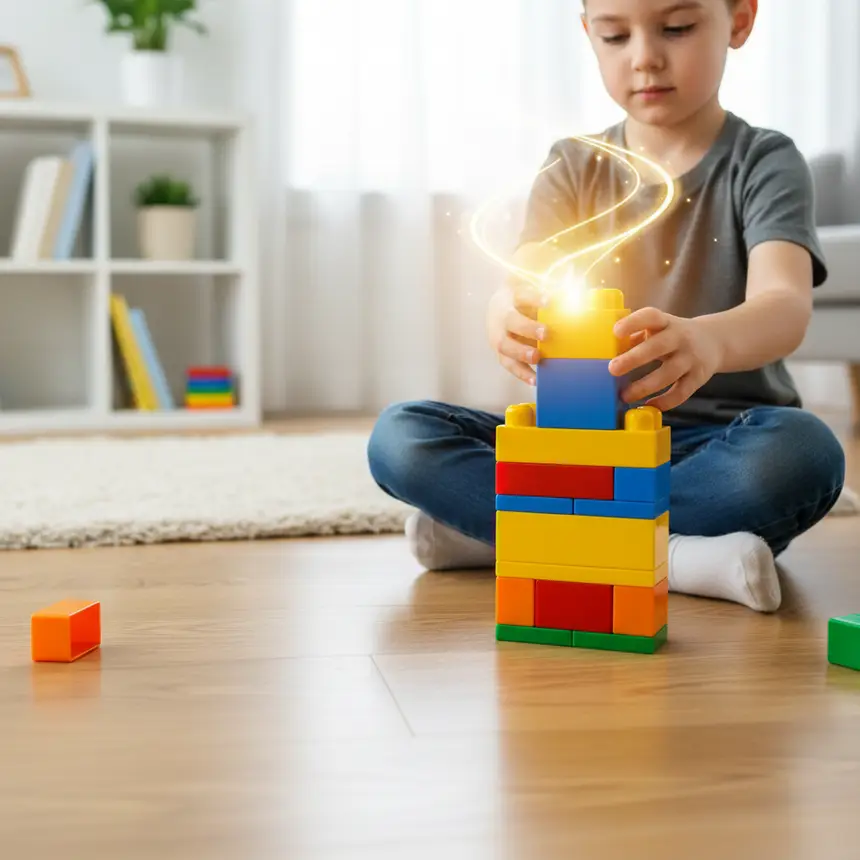
Children grow at their own unique pace. Understand the characteristics of each early childhood developmental stage, why tailored developmental assessments are crucial for your child, and how to wisely utilize the results. We provide practical methods to answer parents' questions and support their child's potential.

Discovering Your Child's Unique Growth Pace: The First Step in Developmental Understanding
Every child embarks on a unique developmental journey, unfolding at their own rhythm, much like the changing seasons. Early childhood is a period of remarkable transformation, encompassing language acquisition, social skill development, cognitive reasoning, and sensory integration. Understandably, parents sometimes find themselves wondering, 'Is my child progressing slower than their peers?' when they observe differences. These moments call for a proper understanding of the developmental process. Paying close attention to every small action or reaction your child displays and trying to decipher its meaning is crucial for uncovering their potential and effectively supporting their growth. Understanding your child's individual pace goes beyond simple comparisons; it's the fundamental step in respecting their unique traits and needs. This commitment to deeply understanding your child's development lays a strong foundation for them to explore the world ahead more richly.

Key Developmental Areas in Early Childhood: What Should You Observe?
To gain a comprehensive understanding of your child's growth, it's essential to observe various developmental domains in a balanced way. This goes beyond just how well they speak; it involves looking at their overall interaction patterns and problem-solving abilities. Let's explore the key developmental milestones to watch for at different age groups:
1. Language and Communication Skills: Beyond counting how many words your child uses, it's vital to observe how they connect conversations appropriately in specific situations and express their thoughts or emotions. For example, how they ask and answer questions while looking at a picture book, or how they convey their needs non-verbally or verbally.
2. Cognitive and Problem-Solving Abilities: Observe your child's sustained attention during play activities, how they explore new toys or attempt simple puzzles, and how they react to unexpected situations. These observations help gauge their thinking and learning capabilities.
3. Social and Emotional Development: Pay attention to the quality and depth of their social interactions, such as making eye contact with peers or adults, the variety of emotions they express, and their ability to empathize with others' feelings. This also includes their efforts to understand and follow rules during play, and their patience in waiting for their turn.
4. Sensory and Behavioral Traits: Observe if your child reacts excessively sensitively or, conversely, indifferently to various sensory stimuli like sounds, textures, or movements. Repetitive movements or their adaptability to unpredictable environments can also provide important clues to understanding your child's behavioral characteristics.
Consistently documenting these observations in each area within daily life can greatly assist in objectively understanding your child's developmental journey and providing sensitive support where needed.
1. Language and Communication Skills: Beyond counting how many words your child uses, it's vital to observe how they connect conversations appropriately in specific situations and express their thoughts or emotions. For example, how they ask and answer questions while looking at a picture book, or how they convey their needs non-verbally or verbally.
2. Cognitive and Problem-Solving Abilities: Observe your child's sustained attention during play activities, how they explore new toys or attempt simple puzzles, and how they react to unexpected situations. These observations help gauge their thinking and learning capabilities.
3. Social and Emotional Development: Pay attention to the quality and depth of their social interactions, such as making eye contact with peers or adults, the variety of emotions they express, and their ability to empathize with others' feelings. This also includes their efforts to understand and follow rules during play, and their patience in waiting for their turn.
4. Sensory and Behavioral Traits: Observe if your child reacts excessively sensitively or, conversely, indifferently to various sensory stimuli like sounds, textures, or movements. Repetitive movements or their adaptability to unpredictable environments can also provide important clues to understanding your child's behavioral characteristics.
Consistently documenting these observations in each area within daily life can greatly assist in objectively understanding your child's developmental journey and providing sensitive support where needed.
※ This post contains affiliate links. I may earn a commission at no extra cost to you.


Tailored Developmental Assessments for Your Child: Choosing and Utilizing Wisely
When questions about your child's development arise, objective assessments can provide valuable insights. The most crucial aspect here is a personalized approach that deeply understands and considers your child's current age and individual characteristics. Since every child has a unique temperament and disposition, their responses in unfamiliar environments or their participation in activities will vary widely.
Parents can actively participate in forming a comprehensive understanding of their child by thoroughly documenting their child's usual behaviors, unique patterns, and interests before the assessment and sharing this information with the professional.
- Ensure the assessment method is appropriate for your child's age and developmental stage: For very young children, natural, play-based observation might be more effective, while for older children, assessments involving specific task completion could be suitable. A flexible approach tailored to your child's developmental stage is necessary, rather than a rigid, one-size-fits-all standardized method.
- Confirm the assessment understands and reflects your child's temperament: Consider beforehand if your child adapts easily to new environments or needs ample time, or if they prefer active physical play. A more accurate and natural observation of your child can be achieved when they feel comfortable in the assessment setting.
- Verify that sufficient explanation and consultation are provided after the assessment: Assessment results are not just simple data points represented by numbers. In-depth consultation is essential, covering your child's behavioral traits observed during the assessment, their strengths and challenges, and concrete advice on how parents can support their child in daily life. When choosing an assessment provider, it's crucial to confirm the quality and richness of such consultations.
Parents can actively participate in forming a comprehensive understanding of their child by thoroughly documenting their child's usual behaviors, unique patterns, and interests before the assessment and sharing this information with the professional.

Beyond the Assessment: A Parenting Guide to Nurturing Your Child's Potential
The results of your child's developmental assessment are not an endpoint but a new starting line. Instead of reacting emotionally to the results, they should be used to understand your child's current state and to map out their future growth. Even if the assessment indicates some delays in certain areas, this is merely a signal that your child might need more tailored support and stimulation; it certainly does not define their potential.
After a developmental assessment, planning appropriate play activities and interaction methods with a professional and consistently implementing them in daily life is the most effective way to support your child's growth. This journey of understanding your child will also be a meaningful period of growth for you as a parent.
- Discover and leverage strengths: It's important to identify your child's strengths and build a parenting strategy that uses these strengths to address areas needing more development. For instance, if your child is strong in physical activities, you might introduce language concepts through movement.
- Create a positive interactive environment: Provide an environment where your child feels secure and can freely explore and learn. A warm attachment relationship with parents positively influences not only emotional development but all developmental domains. It's crucial to converse at your child's level and genuinely encourage even small achievements.
- Continuous observation and flexible support: Development is not static; it's an ever-changing process. Even after an assessment, continue to observe your child's evolving behaviors and flexibly adjust play methods or learning environments accordingly. If necessary, maintain ongoing communication with professionals to find the most optimized support strategies for your child.
After a developmental assessment, planning appropriate play activities and interaction methods with a professional and consistently implementing them in daily life is the most effective way to support your child's growth. This journey of understanding your child will also be a meaningful period of growth for you as a parent.
Frequently Asked Questions
Q. My child seems to be developing slower than peers. When should I seek professional help?
A. While every child develops at their own pace, it's advisable to consult a professional if your child consistently shows significant differences from peers in specific areas, or if they fail to meet developmental milestones for an extended period. For example, if an 18-month-old isn't using meaningful words, or a 36-month-old struggles to form short sentences, seeking professional advice can be beneficial.
Q. If the developmental assessment results are not favorable, should I necessarily worry?
A. Developmental assessment results are important data for understanding your child's current state, but they are not absolute indicators. Rather than worrying excessively if results are not as expected, it's crucial to view this as a positive opportunity to identify areas where your child needs additional support and to create a concrete support plan with a professional that is tailored to your child.
Q. What simple things can I do at home to support my child's development?
A. At home, it's important to make eye contact, interact warmly, and converse consistently with your child. Read various picture books, sing songs together, or engage in simple play to stimulate your child's curiosity. Additionally, providing sufficient sleep, balanced nutrition, and opportunities to move freely and explore in a safe environment are also very important.