Wondering how to start your child's English journey? Discover practical ways to create a joyful, engaging English environment without the pressure of expensive programs or strict 'parent-led' methods. Uncover the secrets to effective early English education for your child.

H2: When Should My Child Start English? A Common Parental Dilemma
Watching our young children explore the world fills us with a desire to provide them with every possible advantage. Introducing a second language, particularly English, at an early age is often high on that list. You might see other toddlers effortlessly humming English tunes or hear stories of preschoolers chattering away in simple English phrases. This naturally sparks the question, 'Should my child start learning English now?' It feels like a crucial investment in their future, yet it also brings anxiety—are we starting too early, or perhaps too late? Without a thoughtful strategy that aligns with your child's unique personality and interests, such efforts could even prove counterproductive. The first step to effective early English education begins with creating an environment that truly captivates your child.

H2: Early English Education: Three Common Hurdles Parents Face
Many parents encounter significant, shared challenges when considering early English education for their little ones. Firstly, there's the substantial financial commitment. High-end language programs or comprehensive educational sets often come with a hefty price tag, leaving parents to wonder if such an investment truly guarantees optimal outcomes for their child. For example, some intensive English immersion programs can cost thousands of dollars monthly. Even with such financial outlay, if the child doesn't have a consistent English-speaking environment at home, the initial learning gains might plateau or even diminish. Secondly, there's the time pressure of 'parent-led' English. In our busy daily lives, it's incredibly challenging for parents to consistently lead every lesson and utilize every resource effectively. Lastly, parents frequently worry about their child's engagement. Will my child genuinely enjoy and stick with learning English, or will they lose interest and develop an aversion? If a child struggles to adapt to a specific teaching method or finds it boring, the early language journey, intended to be enriching, can quickly become a source of stress. These concerns are major reasons why many parents hesitate to begin early English education.
※ This post contains affiliate links. I may earn a commission at no extra cost to you.


H2: Strategies for Creating an Effective Child-Centered English Immersion Environment
So, how can we design an effective early English learning experience for our children? The core principle is 'natural exposure and interest stimulation.' Instead of focusing on forced learning, it's crucial to cultivate an atmosphere where children can joyfully absorb English.
- First, establish a consistent English presence in daily life. Rather than setting aside specific 'English time,' weave the language naturally into their surroundings. Play English nursery rhymes or cartoons in the background, or casually intersperse simple English words into your daily conversations. The goal is to integrate English into their play and daily activities, making it feel like a natural part of their world.
- Second, select captivating materials appropriate for their developmental stage. Focus on engaging picture books, videos, songs, and interactive toys that align with your child's age and interests, rather than just the most expensive or popular ones. Resources that offer rich visual and auditory stimuli and encourage interaction significantly boost a child's immersion. Through multi-sensory materials, children perceive English not as a subject to 'study,' but as an exciting 'exploration.'
- Third, let go of parental impatience. Prioritize helping your child have positive experiences with English and feel comfortable with it, rather than aiming for perfect fluency. Offer plenty of praise and encouragement for their small efforts and responses, fostering an environment where mistakes are seen as part of learning. This approach is far more beneficial for long-term language development.
H2: Practical, Fun Ways to Integrate Early English Learning into Daily Life
Now, how can we concretely put these child-centered English immersion principles into practice in our daily lives?
1. Create short, fun daily English moments: Instead of an elaborate study plan, consistently engage in simple, low-pressure activities for about 10-15 minutes a day. This could be singing your child's favorite English nursery rhyme, reading a short English picture book, or watching a single English animated episode. Starting with simple English phrases like 'Let's sing a song!' helps build a routine.
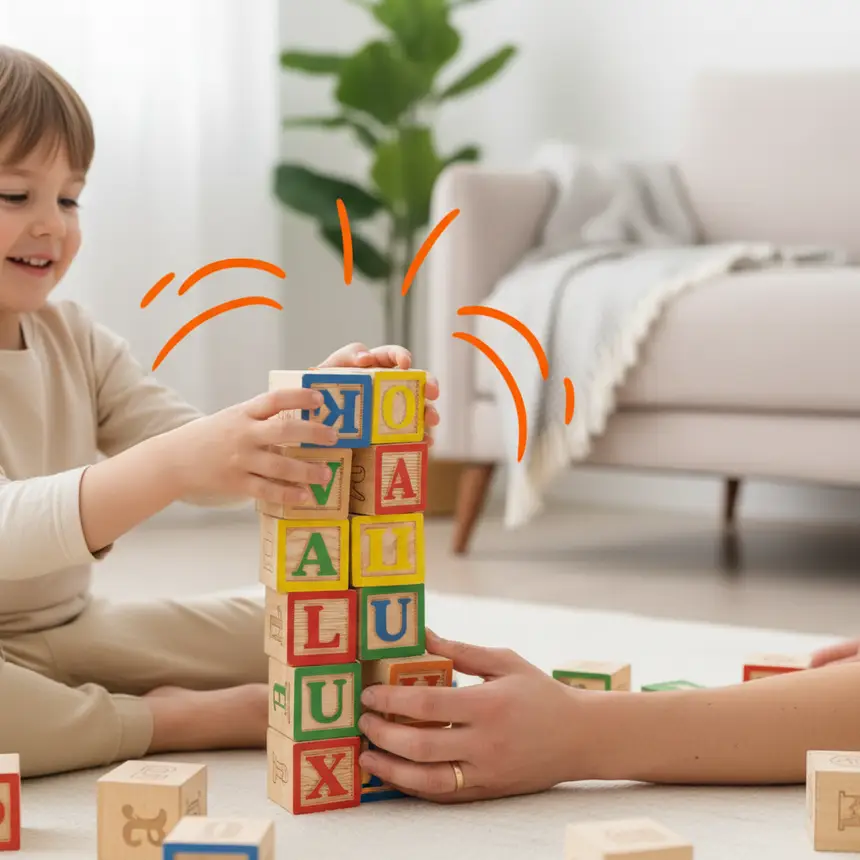
2. Connect English within playtime: Naturally weave English words and sentences into your child's favorite activities like role-playing, block building, or drawing. For instance, during doll play, use phrases like 'Hello, doll!' or 'What's your name?' or name block colors in English. The core idea is to make it genuinely 'fun' for your child.
3. Utilize diverse senses: Don't limit English learning materials to just audio and visual resources. Incorporate tactile and kinesthetic senses too. English card games, moving your body to English chants, or building with blocks that have English words on them can simultaneously boost your child's memory and interest. Through hands-on experiences, children embody English words and concepts.
4. Respect your child's initiative: Instead of forcing topics or materials your child isn't interested in, provide English exposure opportunities based on what captivates them. Giving children the chance to choose and explore independently strengthens their intrinsic motivation for learning. If your child is obsessed with a particular character, using English content featuring that character can be a great strategy.
1. Create short, fun daily English moments: Instead of an elaborate study plan, consistently engage in simple, low-pressure activities for about 10-15 minutes a day. This could be singing your child's favorite English nursery rhyme, reading a short English picture book, or watching a single English animated episode. Starting with simple English phrases like 'Let's sing a song!' helps build a routine.
2. Connect English within playtime: Naturally weave English words and sentences into your child's favorite activities like role-playing, block building, or drawing. For instance, during doll play, use phrases like 'Hello, doll!' or 'What's your name?' or name block colors in English. The core idea is to make it genuinely 'fun' for your child.
3. Utilize diverse senses: Don't limit English learning materials to just audio and visual resources. Incorporate tactile and kinesthetic senses too. English card games, moving your body to English chants, or building with blocks that have English words on them can simultaneously boost your child's memory and interest. Through hands-on experiences, children embody English words and concepts.
4. Respect your child's initiative: Instead of forcing topics or materials your child isn't interested in, provide English exposure opportunities based on what captivates them. Giving children the chance to choose and explore independently strengthens their intrinsic motivation for learning. If your child is obsessed with a particular character, using English content featuring that character can be a great strategy.

H2: Embracing Joy Over Haste: Supporting Your Child's Language Growth
Starting English early is more like a marathon than a sprint. Instead of feeling rushed or comparing your child to others, focus on consistently providing joyful experiences at your child's own pace and in their unique way. Rather than striving for a perfect environment, begin with small changes you can implement right now. Your most significant role as a parent is to help your child perceive English not as a foreign language, but as a delightful tool for exploring the world and connecting with others. Why not start today by singing an English nursery rhyme together, or sharing an English picture book? Small beginnings can lead to significant shifts in your child's language development. Simply creating an environment where your child can joyfully engage with English at their level is more than enough.
Frequently Asked Questions
Q. At what age is it best to start teaching English to young children?
A. It's generally recommended to naturally expose children to English after they start establishing their native language foundation, typically around age three. The key factor isn't the age itself, but rather your child's interest and readiness. The most appropriate time is when your child can absorb English without feeling stressed.
Q. My child resists learning English. What should I do?
A. The most important thing is not to force it. Temporarily reduce the time spent on English, or try subtly integrating English into other activities your child enjoys (e.g., drawing, crafts). Diversify your English exposure methods and find elements that genuinely interest your child to naturally reintroduce the language.
Q. Is 'parent-led' English essential for it to be effective?
A. While parent-led English can be effective, it's not strictly essential. If you find it challenging to teach directly, simply creating an environment where your child is naturally exposed to English through high-quality videos, songs, and picture books can be sufficient. Consistent and positive exposure is what truly matters.
Q. Do I need to invest in expensive English programs or schools?
A. Not necessarily. You can create a perfectly effective English environment using engaging picture books, YouTube channels, free apps, and other diverse resources that match your child's interest and level. What's most important isn't the cost of the materials, but how much your child can enjoy and immerse themselves in them.