Choosing the right daycare nap mat is crucial for your child's stable adjustment and restful sleep. Discover tips on selecting the best nap mat, from materials to maintenance, to create an optimal sleep environment.

The Surprising Benefits of Quality Naps for Your Child's Daycare Journey
When your little one first steps into the new world of daycare, they expend a significant amount of energy navigating unfamiliar spaces and routines. During this crucial transition, naptime is more than just a break; it plays a pivotal role in a child's emotional stability and physical development. Adequate and restorative naps help alleviate stress, consolidate new information learned throughout the morning, thereby boosting cognitive development. Furthermore, quality sleep strengthens the immune system and supports the healthy secretion of growth hormones, making it a vital period for overall well-being. Therefore, thoughtfully preparing a comfortable daycare nap mat ensures your child has a consistent, cozy spot to rest, which significantly contributes to their smooth adjustment and overall happiness in the new environment. A soft, inviting sleep setup can help children feel secure and foster a sense of 'their own space,' even when away from home.

Key Criteria for Selecting the Perfect Daycare Nap Mat for Your Little One
To provide the best possible sleep environment for your child, consider several key factors when choosing a daycare nap mat. First and foremost, material safety and skin-friendliness are paramount, as the mat will be in direct contact with your child's skin for extended periods. Opt for natural materials like 100% cotton or organic cotton, ensuring they are free from harmful substances and gentle enough for sensitive skin. Look for relevant safety certifications. Second, easy hygiene maintenance is essential. Children's items are prone to getting dirty and require frequent washing, so a mat that can be machine-washed and tumble-dried without damage offers great convenience. An all-in-one design, where the pillow, mat, and blanket are connected, simplifies preparation and cleanup, benefiting both parents and caregivers. Third, choose a mat with appropriate thickness and support. A mat that's too thin might transfer coldness or hardness from the floor, disturbing sleep, while one that's too plush could hinder proper posture. An ideal thickness of about 1.5 to 2 inches (3-5 cm) provides stable support for your child's body. Finally, portability and easy storage are important. A lightweight, compact mat that fits easily into a designated bag makes daily commutes to and from daycare much more convenient. A design that appeals to your child can also contribute to their emotional comfort.
※ This post contains affiliate links. I may earn a commission at no extra cost to you.

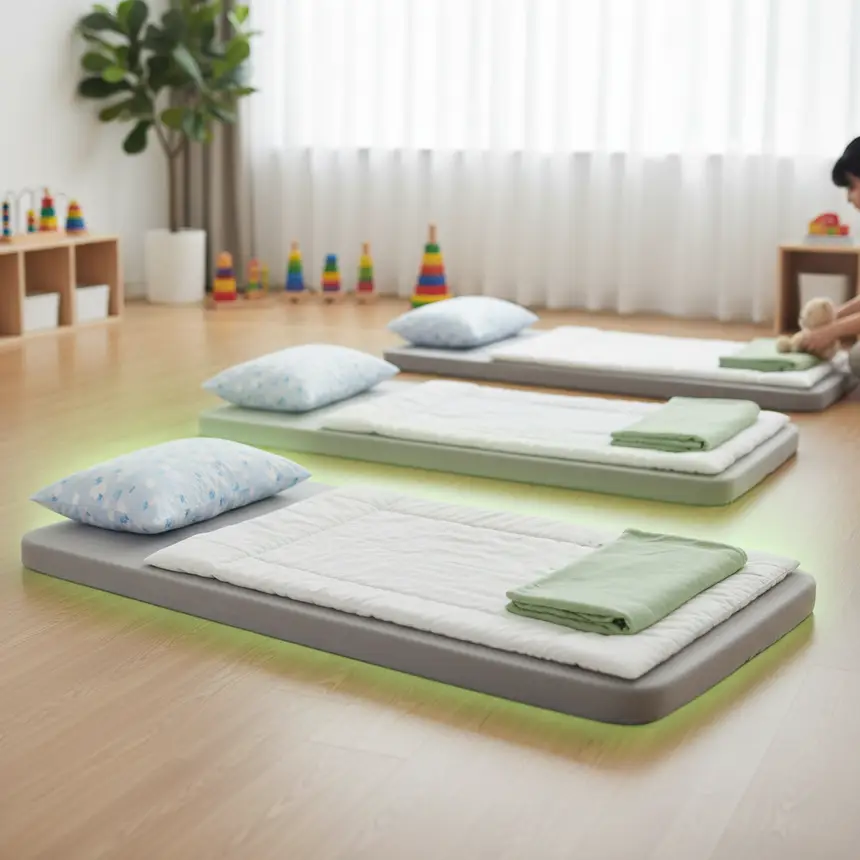
Important Considerations for Toddler Nap Environments in Daycare
When preparing and utilizing a daycare nap mat, there are several important considerations to keep in mind. The most crucial is maintaining cleanliness. For your child's skin health and overall hygiene, it's vital to wash the nap mat thoroughly at least once a week and ensure it's completely dry. Opt for products that retain their shape and texture well after washing. Also, select a nap mat that is the appropriate size for your child's growth, allowing them to move freely without feeling confined. A mat that is too large or too small can disrupt quality sleep.
For different age groups, considerations may vary. For infants and younger toddlers (0-2 years), prioritize safety by choosing simple designs without excessive embellishments or small parts. To prevent any potential choking hazards, consider breathable materials over overly thick bedding. For older toddlers and preschoolers (3-5 years), involving them in choosing a design they like can foster a positive attitude towards daycare. Adjusting bedding for seasonal changes, such as adding a light blanket or varying mat materials, also helps create a comfortable nap environment. Such thoughtful preparations will lay a strong foundation for your child to thrive happily and healthily in their daycare journey.
For different age groups, considerations may vary. For infants and younger toddlers (0-2 years), prioritize safety by choosing simple designs without excessive embellishments or small parts. To prevent any potential choking hazards, consider breathable materials over overly thick bedding. For older toddlers and preschoolers (3-5 years), involving them in choosing a design they like can foster a positive attitude towards daycare. Adjusting bedding for seasonal changes, such as adding a light blanket or varying mat materials, also helps create a comfortable nap environment. Such thoughtful preparations will lay a strong foundation for your child to thrive happily and healthily in their daycare journey.
Frequently Asked Questions
Q. Is an all-in-one nap mat a must-have for daycare?
A. While not strictly mandatory, all-in-one nap mats are popular because they integrate the pillow, mat, and blanket into one unit. This reduces the risk of losing individual pieces and makes packing, unpacking, and carrying much more convenient, enhancing efficiency in a daycare setting.
Q. What's the most important factor when choosing nap mat material?
A. Since the nap mat will be in direct contact with your child's skin for extended periods, ensuring it's made from safe, non-toxic materials is paramount. Prioritize natural, breathable fabrics like 100% cotton or organic cotton that are gentle on the skin, and always check for safety certifications.
Q. How often should a daycare nap mat be washed?
A. For your child's hygiene and health, it's recommended to wash the nap mat at least once a week. If your child sweats a lot or the mat becomes visibly soiled, more frequent washing is advised to maintain cleanliness.
Q. Do nap mat selection criteria change with a child's age?
A. Yes, they can. For infants and young toddlers, prioritize simple designs without excessive embellishments and breathable materials for safety. For older preschoolers, you might consider involving them in choosing a design they like, and also consider the mat's warmth and material suitability for seasonal changes.