A comfortable nap mat is key for your child's smooth daycare transition. Discover essential tips for selecting the best nap mat, considering materials, hygiene, and portability, to support their well-being.

The Critical Role of Naps in Your Child's Daycare Adjustment
For a child entering daycare for the first time, the new environment brings both excitement and an unfamiliar sense of tension. Naps, in particular, represent your child's first independent rest period outside of home, playing a crucial role in their daily mood and overall adaptation to daycare. If your child can comfortably and deeply sleep in an unfamiliar space, they'll develop a positive perception of their new surroundings and recharge the energy needed for subsequent activities. Conversely, an uncomfortable or insecure nap environment can increase a child's stress and negatively impact their participation in daytime activities. Therefore, creating an optimal nap space for your child is a vital first step toward a successful daycare experience. It's beneficial to observe your child's usual sleep habits beforehand – where they sleep most comfortably at home, what texture of blanket they prefer – and actively use this information when choosing a nap mat.

Three Smart Criteria for Selecting a Daycare Nap Mat
The nap mat your child uses daily at daycare is more than just a sleeping aid; it's an important item that directly touches your child's skin and accompanies them for long hours. Therefore, careful selection is necessary, and considering the following three criteria is wise:
- 1. Prioritizing Skin Health and Comfort: It's crucial to confirm that the mat is made from natural materials like pure cotton to protect your child's delicate skin. Materials that minimize skin irritation and offer good breathability provide a pleasant sleep environment. Additionally, ensure the product has safety certifications from reputable organizations (e.g., certifications for absence of harmful substances) for peace of mind. To insulate from cold floors and provide adequate comfort, consider products with padding that offers several centimeters of thickness. Too thin can be uncomfortable, while too thick can be bulky, so finding a balance is key.
- 2. Ease of Cleaning for Optimal Hygiene: Daycare nap mats need frequent washing, at least weekly, for hygiene. Therefore, ease of cleaning should be a top priority. A product that can be machine washed entirely and is dryer-safe will significantly reduce parental effort. Opt for durable, high-quality items that won't easily deform or fade after washing, ensuring long-term hygienic use.
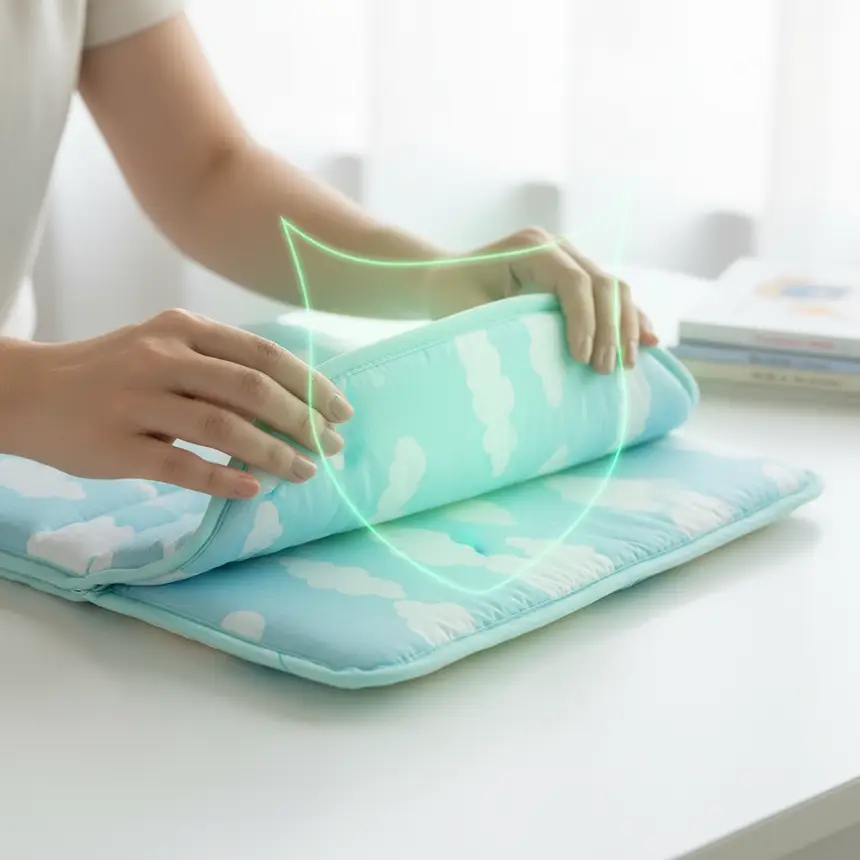
- 3. Practicality: Portability and Space Efficiency: Since the item will be transported to and from daycare daily and stored there, portability and ease of storage are also important selection criteria. An all-in-one design, where the pillow, mat, and blanket are combined, simplifies preparation as you don't need to pack separate items, and it's convenient when folded as it doesn't take up much space. Furthermore, a clean, practical design that fits well into the daycare environment makes organizing your child's belongings easier. Before purchasing, always check the washing and drying instructions, and if possible, let your child lie on it to ensure they find it comfortable.
※ This post contains affiliate links. I may earn a commission at no extra cost to you.

Key Considerations and Ideal Age for Daycare Nap Mats
When preparing your child's daycare nap mat, consider a few additional points to help them sleep more comfortably and safely:
- Individual Needs Matter: There's no one-size-fits-all perfect nap mat. Each child has different body temperatures, sleep positions, and preferred textures, so choose one that adequately considers your child's specific traits. For example, for a child who gets hot easily, opt for a thin, breathable blanket; for a child who gets cold, choose a material with good insulation. Also, a transition period may be needed for a new blanket, so allowing your child to use it at home beforehand can help them get familiar with it.
- Safety First: Details to Check: As with all products for infants and toddlers, safety is paramount for nap mats. Carefully check for any small buttons, strings, or decorations that could pose a choking or entanglement hazard. Select products with sturdy stitching and durable construction that won't easily tear or unravel during use. Double-check for certifications confirming the absence of harmful substances to protect your child's health.
- Appropriate Age and Usage: Nap mats are typically used from infancy/toddlerhood through preschool age, coinciding with daycare entry. Consider your child's growth rate and choose a size that isn't too small, or opt for a generous size that can accommodate some growth. Ensure the mat provides enough space so your child doesn't feel cramped while sleeping. If you've prepared a new nap mat, it's a good idea to lay it out at home and let your child play or lie on it, helping them naturally recognize it as their own.
Frequently Asked Questions
Q. Does a daycare nap mat have to be an all-in-one style?
A. Not necessarily, but all-in-one nap mats offer the convenience of not having to pack a separate pillow, pad, and blanket, simplifying preparations. They also make it easier for children to organize their own bedding at daycare. Their portability and ease of storage make them popular with busy parents. If you prefer separate pieces, careful management is essential to avoid losing individual items.
Q. How often should I wash the nap mat?
A. It's recommended to wash the nap mat at least once a week for your child's skin health and hygiene. If your child sweats a lot or has allergies, more frequent washing is advisable. Choosing a mat that is easy to wash will greatly assist with this regular maintenance.
Q. What should I do if my child rejects their new nap mat?
A. It's common for children to feel unfamiliar with or reject a new nap mat. Before daycare starts, lay the mat out at home and encourage your child to play or nap on it to help them feel more familiar with it. You can also place their favorite toy or comfort blanket nearby to provide a sense of security, or talk positively about the mat to create a positive experience.