Worried about developmental delay signs in your 4-year-old? Understand key milestones in language, social, and cognitive development. Learn about early intervention strategies focused on nutrition, activity, and communication, along with home-based practices to support your child's healthy growth.

Is My Child Developing Normally? Empathizing with Common Parental Worries
Watching our beloved children grow and thrive is a source of immense joy for all parents. However, it's also common to find ourselves comparing our child to their peers, leading to questions like, 'Is my child a little behind?' or 'Other kids are already doing that, why isn't mine yet?' These concerns are particularly natural around age four, a period when children typically show significant development in language, social skills, and cognitive abilities. Addressing these worries is the first step toward accurately understanding your child's current developmental stage and providing appropriate support if needed. It requires a wise approach: respecting your child's unique pace while also being attentive to any important signals you might be overlooking.

Key Developmental Milestones and Potential Red Flags for 4-Year-Olds
Age four is a pivotal time when children begin to explore the world around them and form social connections. During this period, they make significant strides in various domains, including language, social-emotional skills, cognition, and motor abilities. However, it's important to remember that not all children develop at the same pace; individual differences and environmental factors play a role. Below are some general developmental milestones to expect in a 4-year-old, along with signs that might suggest a developmental delay.
If you observe these signs, it's not immediately a cause for alarm. Instead, it's crucial to consistently monitor your child's overall development and consult with a professional. These could be temporary phases, or there might be areas where your support at home can make a significant difference.
- Language Development: They can answer simple questions, form sentences of 2-3 words, and talk about their thoughts or experiences. Red flags might include a significantly smaller vocabulary than peers, lack of eye contact during communication, or difficulty following instructions.
- Social-Emotional Development: They interact with peers, begin to understand and follow simple rules, learn to take turns, and start expressing emotions. Red flags could be a lack of interest in peers, preferring to play alone, or difficulty regulating emotions, leading to frequent tantrums or aggressive behavior.
- Cognitive Development: They understand simple concepts (e.g., big/small, more/less), identify colors and shapes, and engage in imaginative play. Red flags might include a lack of interest in learning new things, or struggling with simple activities like puzzles that peers find easy.
If you observe these signs, it's not immediately a cause for alarm. Instead, it's crucial to consistently monitor your child's overall development and consult with a professional. These could be temporary phases, or there might be areas where your support at home can make a significant difference.
※ This post contains affiliate links. I may earn a commission at no extra cost to you.


Unlocking Your Child's Potential: The Integrated Approach of Nutrition, Activity, and Communication
To support your child's healthy development, an integrated approach encompassing various areas is more effective than focusing on just one or two methods. Here are three key elements to help unlock your child's full potential:
1. Brain-Boosting Nutrition: Providing a balanced diet rich in essential nutrients for brain development is crucial. This includes Omega-3 fatty acids (found in fatty fish, nuts), antioxidants (berries, leafy green vegetables), vitamins, and minerals. Prioritize fresh, natural foods over processed ones, and establish regular eating habits.
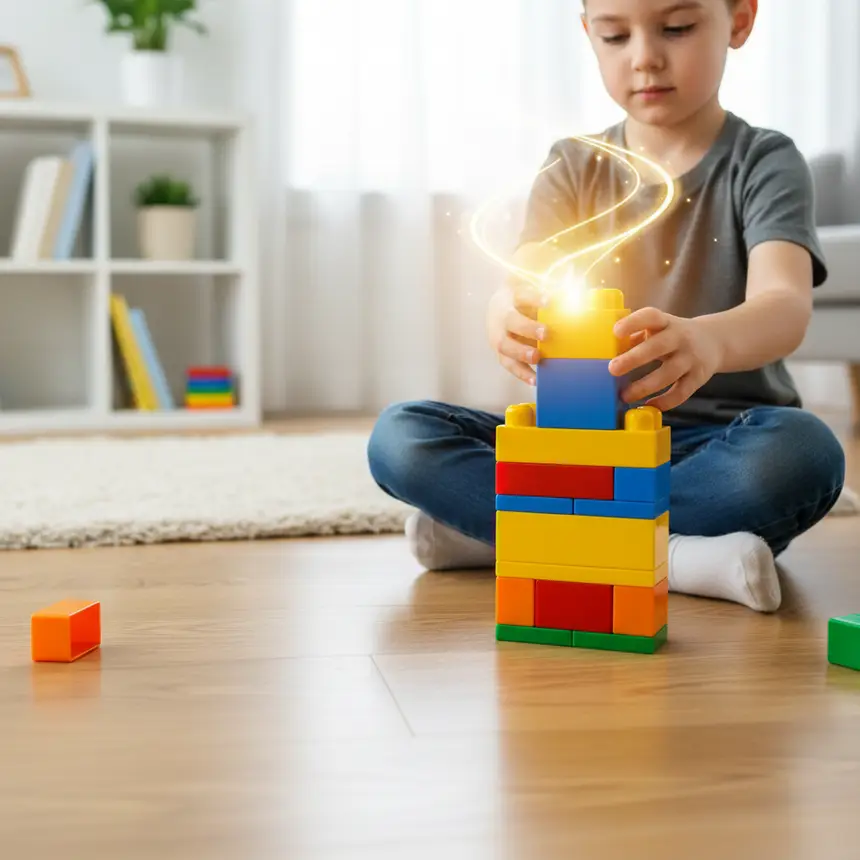
2. Holistic Development Through Physical Activity: Diverse physical activities like outdoor play, ball games, and cycling not only support gross and fine motor skills but also stimulate brain activity and improve concentration. Additionally, activities that involve finger manipulation, such as building blocks, drawing, or cutting with scissors, enhance fine motor development and hand-eye coordination. Aim for at least an hour of active play daily.
3. Fostering an Environment of Active Interaction and Communication: Engaging in eye-level conversations with your child and sharing emotions is vital for social and language development. Reading picture books together, asking and answering questions about the story, and engaging in role-play can help them experience various social situations. Simply listening attentively to your child's stories and responding positively will make them feel secure and encourage active communication.
1. Brain-Boosting Nutrition: Providing a balanced diet rich in essential nutrients for brain development is crucial. This includes Omega-3 fatty acids (found in fatty fish, nuts), antioxidants (berries, leafy green vegetables), vitamins, and minerals. Prioritize fresh, natural foods over processed ones, and establish regular eating habits.
2. Holistic Development Through Physical Activity: Diverse physical activities like outdoor play, ball games, and cycling not only support gross and fine motor skills but also stimulate brain activity and improve concentration. Additionally, activities that involve finger manipulation, such as building blocks, drawing, or cutting with scissors, enhance fine motor development and hand-eye coordination. Aim for at least an hour of active play daily.
3. Fostering an Environment of Active Interaction and Communication: Engaging in eye-level conversations with your child and sharing emotions is vital for social and language development. Reading picture books together, asking and answering questions about the story, and engaging in role-play can help them experience various social situations. Simply listening attentively to your child's stories and responding positively will make them feel secure and encourage active communication.

Home-Based Strategies for Supporting Your Child's Development and a Thoughtful Conclusion
The most crucial environment for supporting your child's development is the home. Encourage your child's growth through these consistent home-based support strategies:
- Create Consistent Routines: A predictable environment provides psychological security for children and helps them acquire new skills. Establish and maintain regular times for bedtime, meals, and play.
- Positive Reinforcement and Praise: Specifically praise and encourage your child for small achievements. Instead of just saying 'Good job,' try phrases like, 'You stacked those blocks really high! You balanced them so well!' Praising specific actions is more effective for building your child's sense of accomplishment and motivation.
- Focus on Your Child's Interests: Observe what your child is interested in and connect those interests to play or learning. For example, if they love dinosaurs, read dinosaur books together or play with dinosaur figures.
- Open Communication with Professionals: If you have ongoing concerns about your child's development, do not hesitate to consult with a pediatrician or developmental specialist. Their advice can alleviate parental anxiety and help you find the most appropriate support for your child. Early intervention can play a decisive role in helping your child reach their full potential and grow healthily. Your warm attention and appropriate support are the greatest gifts for your child's bright future.
Frequently Asked Questions
Q. My 4-year-old seems a bit slower in development than peers. When should I seek professional help?
A. While there's a wide range of normal development, if your child consistently shows significant differences from peers in specific areas or struggles with daily life activities, it's best to consult a professional. If you suspect language developmental delays (difficulty forming simple sentences), social deficits (avoiding peer interaction), or cognitive developmental delays (difficulty with new learning), seeking advice from a pediatrician or developmental specialist is a wise step.
Q. Are there specific play activities I can do at home to help my child's development?
A. Play is the best way to support your child's development. For language development, reading picture books and engaging in question-and-answer sessions, along with role-playing, are excellent. For social-emotional development, group play with friends and using emotion cards can be helpful. For cognitive development, engage in activities that provide various stimuli like building blocks, puzzles, and 'find the hidden object' games. The most important thing is that your child finds it engaging and enjoyable.
Q. Are there any particular nutrients that are good for a child's development?
A. Various nutrients are essential for your child's brain development and overall growth. Omega-3 fatty acids (fatty fish, nuts), choline (egg yolks, legumes), antioxidant vitamins (berries, leafy green vegetables), and zinc (meats, legumes) are particularly important. Rather than focusing on specific nutrients, providing a balanced diet with a variety of food groups is the most effective approach.
Q. If my child is diagnosed with a developmental delay, how should I, as a parent, cope?
A. First, it's important to take time to understand and accept your child's diagnosis. Then, work with professionals to develop a support and education plan tailored to your child's needs. Consistent love and support, along with a positive attitude, are crucial. Encourage every small achievement. It's also important for you, as a parent, to manage your own stress and seek support from others when needed. View it as a journey of growth you take together with your child.