Wondering how to start early math learning? Discover play-based strategies and educational approaches that foster number sense and logical thinking in children according to their age and interests. Learn smart ways to awaken your child's mathematical potential.

H2. Starting Your Child's Math Journey: Where to Begin?
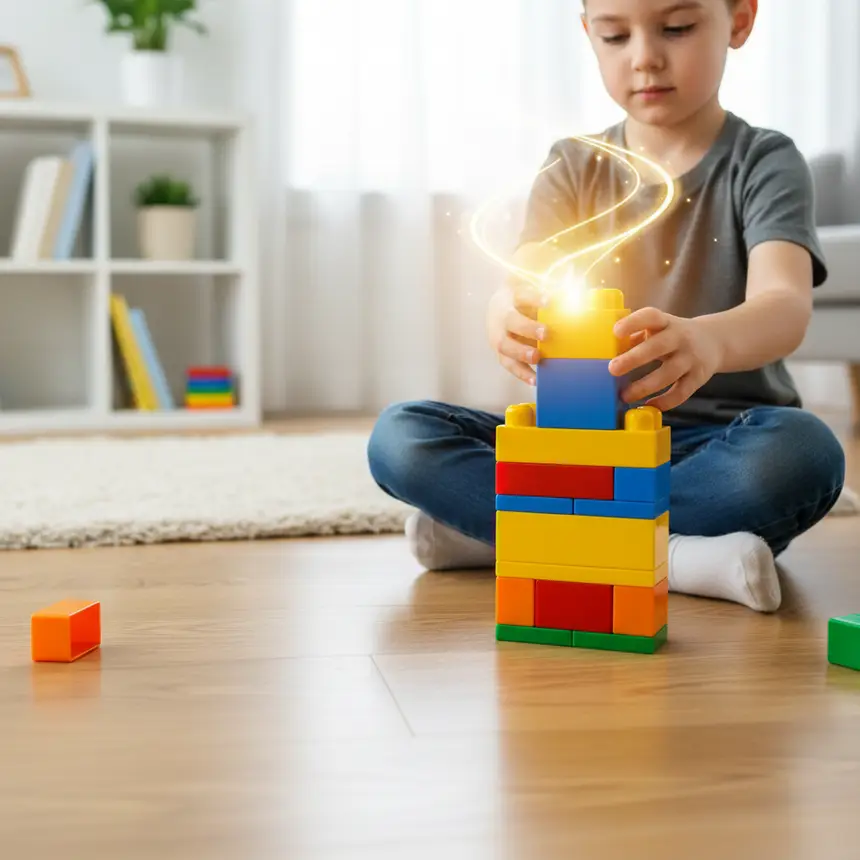
Many parents find themselves at a crossroads when it comes to introducing math to their young children. You observe your little one naturally exploring numbers and shapes while playing with blocks or toys, and a desire grows to nurture that budding curiosity effectively. The common wish among parents is to avoid rigid academic pressure at such a young age, yet not miss the crucial window for developing mathematical thinking. With a plethora of early math learning approaches available, it's challenging to discern which method best suits your child's developmental stage and fosters a positive attitude towards learning. The worry of dampening their interest in math or causing unnecessary stress from early academics is completely understandable. Amidst these concerns, finding a way to cultivate mathematical reasoning in an engaging, child-friendly manner is paramount. Why not start with small steps, connecting mathematical concepts like numbers, shapes, and sizes to everyday play experiences?

H2. Play-Based Early Math Learning: The Secret to Fun and Growth Combined
Early childhood is a period where children grasp the world through concrete experiences and direct interaction, rather than abstract concepts. During this stage, forced or rote-style math education can stifle a child's natural curiosity and instill a negative perception of mathematics. Therefore, it's crucial to help children encounter mathematical concepts organically within an environment they perceive as 'play.' Modern early childhood education considers this, utilizing various engaging learning tools and methods.
- Interactive Content Engagement: Animations, sing-alongs, and character interactions that stimulate children's sight and hearing are effective means of conveying mathematical concepts without boredom. For instance, children can learn number and shape concepts by singing counting songs or embarking on adventures with shape characters.
- Hands-On Activity-Centric Learning: Children gain a deeper understanding of concepts by directly manipulating objects. Creating patterns with pattern blocks, solving puzzles with various shapes to develop spatial awareness, and using manipulatives for sorting and sequencing activities significantly help build foundational arithmetic skills. Over 45 diverse manipulative play activities can stimulate children's cognitive abilities.
- Connection to Elementary Education: Learning experiences designed to naturally link early math concepts with elementary school curricula can ease the academic transition for children. Practicing calculations through everyday elements like time, money, and length also helps develop real-world problem-solving skills.
- Metacognitive Skill Development: Fostering metacognition—the ability to be aware of and regulate one's own learning process—from an early age is vital. For example, when a child makes a mistake, animated or interactive feedback that guides them to understand why they erred and to try again enhances problem-solving and self-directed learning skills. This process ultimately forms the basis for improved long-term learning efficiency.
- Personalized Learning and Interaction: It's effective to accurately assess a child's current learning level and disposition, then provide a tailored curriculum. Play-based assessments help children identify their strengths and weaknesses without pressure. Additionally, regular video calls allow them to solve problems and share ideas with teachers and peers, fostering social and communication skills. Parents can also receive one-on-one coaching from experts to guide their child's learning direction more effectively. Try playing board games or puzzles with your child, discovering mathematical rules together, and discussing solutions.
※ This post contains affiliate links. I may earn a commission at no extra cost to you.


H2. Smart Guidelines for Joyful Early Math Learning for Your Child
The core of early math education is making math a 'fun game' for your child. An environment that sparks interest rather than forces compliance, and encourages enjoyment of the problem-solving process over just getting the right answer, is crucial. Here are concrete guidelines to unlock your child's mathematical potential:
Important Considerations:
It's beneficial to establish a routine of engaging in fun, play-like math activities with your child for short periods, perhaps 10-15 minutes daily. This will significantly help your child perceive math as an approachable and enjoyable subject.
- 1. Understand Your Child's Current Development: Knowing what concepts your child finds interesting or challenging is the starting point for personalized learning. Use game-based assessments or daily observations to gauge your child's current standing.
- 2. Integrate Play and Learning: Naturally weave math into everyday life—counting ingredients during meal prep, finding shapes in objects during a walk, or discussing numbers in storybooks. Approach it as playful exploration.
- 3. Utilize Diverse Senses: Employ visual aids (pictures, videos), auditory aids (songs, stories), and tactile aids (blocks, beads) to allow your child to experience math in a multi-faceted way.
- 4. Provide Opportunities for Metacognitive Development: When your child makes a mistake, instead of immediately giving the answer, ask questions like 'Why did you think that?' or 'Is there another way?' to encourage them to think and correct their own errors.
- 5. Offer Positive Feedback and Encouragement: Praise their effort and process, not just the outcome. Provide ample encouragement for small successes. Parental support is the greatest strength in helping children develop a positive attitude towards math.
Important Considerations:
- Avoid Rushing: Acknowledge that each child develops at their own pace. Refrain from comparing your child to others or pressuring them about learning progress.
- Balanced Activities: While tablet-based or digital learning is beneficial, ensure a balance with plenty of physical activity, reading, creative arts, and other diverse experiences.
- Screen Time Management: Establish clear rules for screen exposure and guide your child to adhere to the agreed-upon times.
It's beneficial to establish a routine of engaging in fun, play-like math activities with your child for short periods, perhaps 10-15 minutes daily. This will significantly help your child perceive math as an approachable and enjoyable subject.
Frequently Asked Questions
Q. At what age should I start introducing math concepts to my child?
A. It varies by individual child, but many children start showing curiosity about numbers around ages 3-4. It's best to begin naturally with play-based activities like counting objects, sorting items, and recognizing basic shapes. Starting when your child shows genuine interest is most important.
Q. How can I make math enjoyable for my preschooler so they don't develop a dislike for it?
A. Approaching learning through play is key. Utilize engaging storytelling, songs, visuals, and hands-on activities to help your child associate math with positive experiences. Praise their exploration and effort rather than just focusing on correct answers, and avoid force or pressure.
Q. I'm concerned about screen time with tablet-based math learning. Is it advisable?
A. Proper time management and content selection are crucial. Tablet learning can be highly engaging due to its interactive audio-visual nature, but it's essential to set daily time limits and ensure a good balance with plenty of physical activity and reading off-screen. It's recommended to keep learning sessions brief, around 20 minutes or less.
Q. What are some tips for parents teaching early math at home?
A. Explain concepts in a simple, fun way that matches your child's developmental level, and avoid forcing them. Encourage your child to discover answers on their own, provide positive reinforcement, and reassure them that making mistakes is part of learning to create a supportive environment. Patience in observing your child's growth is essential.